Saturday, March 5, 2011

What we are doing here...

Life in camp has settled into a set routine. Wake up around 7:15, breakfast at 7:30, head to the cave at 8. Excavate until tea time at 10:30 then continue excavating until 12:30 when we break for lunch. We return to the cave at 1:30 and continue excavating until 4:30. At this time we return to camp and have free time to shower, work on cataloguing, and sometimes for hiking. We then usually all pull our chairs outside the tents and relax and chat while watching the sunset. Andrea will play patty cake games with the kids and Sebastian and Andrew will usually play volleyball or soccer with them. Dinner is around 7:30 and then we are usually all ready for bed by 9.
As far as excavations are going, everything has been smooth. We have all been working in specific areas and are getting a very good feel for our individual units…


(photo by Andrew)

Excavation Unit Breakdown
C9 – Lindsay:
Excavation unit C9 has been very interesting from the start. It dates as of right now to about 40,000-30,000 years ago, in the R group. We have found a large hearth feature that included three stratigraphic units! In excavating we use both artificial (arbitrary) and stratigraphic levels. This means that we create levels based on both the natural stratigraphy as well as in 5cm levels, by doing this we can be more precise in our excavation and where the artifacts and features are located. We are finding many artifacts which are vertically oriented in the SE corner of the unit which has led the team to hypothesize either a pit feature or an area which may indicate fluvial interaction. We have found a few points in the unit which is very exciting, possibly Levallois points as well as some cores. The retouch on the points is fascinating to look at and examine something that hasn’t been seen in many thousands of years. Most of the artifacts are obsidian, a black volcanic stone except for a few chert pieces that we find very rarely. I am working with one of the German students Sebastian (and as he wanted us to add, of Polish ancestry of course). Sebastian doubles as an excavator as well as one of the Total Station operators so he stays quite busy. When he excavates I am usually recording and handling the paperwork that it entails. When I excavate he is usually operating the Total Station so I do my own recording as well as excavating.

M15 – Sarah & Andrew:
We began excavation in this unit right after removing the backdirt. It is the newest and shallowest unit, only 45cm deep. The artifacts are believed to date to around 10,000 years ago, which is either late Paleolithic or early Holocene materials. There are an extreme number of artifacts present, predominantly debitage and it is hypothesized to possibly be a waste pit feature. We are working with the French archaeologist Clement who specializes in lithics from this time period. It has been very fascinating learning from him and he gets so excited when a particularly intriguing artifact is uncovered that it adds to the enjoyment of excavating. Andrew and I have been switching off excavating and recording which keeps us both busy in the excavation process. Recording has been a challenge as we are plotting hundreds of artifacts a day, usually 70-80 at a time. We enjoy keeping Hannah (one of the German grad students) busy at the Total Station.

H9 NE – Sarah:
After Clermont left, we closed M15 and I was reassigned to the BXA unit H9, northeast quadrant. Here, Lindsey had previously been excavating the fluvial channel. A pedestal of sediment remained and I was given the task of removing the pedestal to expose the channel bottom. The sediment in the channel is artifactually sterile so it wasn’t too difficult. It took several days for me to fully expose the channel bottom and in a way it was like sculpting, having to carefully expose the fragile clay border which is the edge of the channel. Once the pedestal was reduced and the channel bottom fully exposed I was able to continue excavating the unit. Here is where it got difficult. It was kind of like a maze meets a puzzle meets a Rubix cube. Seriously. As I excavated, a large burrow (L58) appeared in the NW corner and progressed to the SE where it branched into both a southerly and easterly direction(from above it had the vague outline of a B-12 bomber. The southern branch bisected another burrow which coincidentally happened to be located directly above a third burrow (L69) which we discovered when it collapsed onto itself. The burrows continued outside the boundaries of the quad but we suspect them to double back and connect with a burrow appearing in H9 SE. There are two other unnamed burrows located at the edges of the unit which we have not yet plotted or fully excavated. It is very confusing with burrows because they are assigned different levels and their own stratigraphic units. Due to this, I was at one point working in three stratigraphic units and three levels at the same time and it was getting rather hectic and difficult to keep it all straight. Yesterday we finally decided to close down this unit because of time restraints and the ongoing difficulty with the levels (we were going to have to plot in a new stratigraphic unit and additional level making it four strats and four levels in one quarter meter unit). Overall I was slightly sad to stop working in my unit. I had embraced it as a challenge and as it the oldest unit at the site, I was working in sediments dated to between 48,000 – 55,000 years ago which I thought was really really awesome. At the bottom of the channel was a hearth feature so I predominantly found charcoal and bone fragments as well as a few pieces of lithics including several basalt cores, a buren spall and a few very nice retouched points. I am to begin working with Jessica in her unit (H9 – SE directly next to mine) tomorrow.


N42 E39 – Jessica
For a week I excavated in a “geo trench” whose main function is to track the geological activities in the cave during different environmental stages. Erich and Ollie had a theory that a fluvial channel (stream) was present in the cave at various points in time. This “stream theory” could be supported by a specific formation of rocks within a strat layer, so my job was to uncover them. I had to dig around the rocks and carefully keep them in place (which became an extremely painstaking process). At the end I removed an approx. 20 cm deep layer with 60 rocks fully exposed on top of the soil. After the rocks were uncovered, the pattern showed an obvious formation (not as obvious to me as to the trained eye) revealing the direction of the stream. Through the process I found artifacts as well: small obsidian flakes and cores as well as a few chunks of charcoal. Each individual rock was then mapped using the total station (more than 600 shots were taken –many thanks to Hannah - to complete the job). Although my unit’s main function was not for the archaeological finds, it helped to create a more precise image of the environment of the people who lived in the shelter thousands of years ago.


Surveying! – Lindsey & Tommy
We are the Survey King and Queen! After breakfast, we go with Dr. Ralf and our Ethiopian guide and round up supplies for our trek up or down the mountain depending on the day. Our goal is to find exposed lithics to determine where the best archaeological sites are. Tilled fields are the most likely places to find lithics so that is where we focus our searches. When we approach a field that appears to be promising, we ask our guide to go and ask the local farmers if it is okay for us to enter their fields to start our search. Most of the time we find the ground littered with TONS of artifacts. You can’t help but feel awestruck. If we end up at a site that has a representative assemblage, then we mark the site on the GPS and bag the assemblage to be accessed at a later time. After this, we will retrieve our survey forms and begin to take notes about the landscape, the types of artifacts (usually distinct diagnostic features), and of course the date/time. After a few hours of hiking, we break for lunch, which is a time to talk to the local people and exchange a few laughs. Finally, we head back to the camp completely exhausted and with a fan club in tow. It’s awesome!

Total Station – Hannah:
Hello everyone, you guys don’t know me, I’m a German graduate student and am Site Supervisor and gunner. I’m responsible for processing the total station data. As a Site Supervisor I am in charge of the excavations when Dr. Brandt is not around and I am supposed to keep an eye on the students and help them out if they have any problems; but they are doing a very good job on their excavation units so there is not much for me to do in that regard. As a gunner I am using one of our two total stations and am responsible for the other one as well, which is run by either Sebastian, my fellow student from Cologne, or by Minassie our Ethiopian liaison, my dear friend.
A total station is a surveying tool, used usually in construction works, which you can set up in an existing measurement system and plot new points spatially. We use it to plot the artifact locations and to map the levels and the strat units. In order to set this up, we use existing control points on the cave wall to resection (align) the total station in our measurement system, then we are able to plot the artifacts in 3 dimensions and use the collected data to map our finds in 3D in the GIS program (Dr. Erich Fisher is doing that). Dr. Fisher has already created a 3D model of the rock shelter and in addition to that, I mapped the entrance of the cave this year so that our model will be more complete and we are better able to understand processes that lead to the site formation. Every day after work I have to download and process the data and check it for any mistakes that might have happened during the days work. The actual shooting of the artifacts is not very difficult, though it is demanding work, because you have to concentrate very hard not to make any mistakes, because then at worst the data is lost. So the Students are keeping me busy with collecting hundreds of artifacts a day (today I mapped 700 artifacts), M15 was especially taxing while Clement was there and now Andrew and Christopher have taken his place in being my major employee.

Cataloguing – Everyone is involved in cataloguing which is perhaps the most time consuming. It is also important for keeping track of all of the thousands of artifacts we find at the site. Every evening we are busy numbering bags, putting info cards in them, and uploading data entries and photos to the main database. Although tedious, we make it fun by reading books aloud (Harry Potter!) or listening to music which makes it all go by much faster.

Tuesday, March 1, 2011

Neche Sar Nat'l Park


We woke up early around 5:30 to the chanting sounds of the Christian orthodox and Mosque located on either side of our hotel. We didn’t have to be up till 6:45 but since we were awake, we decided to just get going and so we headed to Neche Sar to do the land part of the park. The entrance was very understated and it was easy to miss the dirt road located between a car repair shop and a primary school. A kilometer back was the actual entrance where we bought our tickets and picked up our armed guard (he sat in the back of the other landcruiser). We all got settled and we were off! Our trek began with a journey through dense forest where we saw and heard many baboons (Rafikii!) and then we entered into a more arid mountainous landscape turning the corner to a beautiful morning vista of the African plains at the base of the mountain next to the lake. We stopped for pictures and the chance to really take in the scenery as well as to imagine what the Paleo climate would have looked like. We continued up and up and over the mountains. At one point it was so steep that Lindsay and I both unconsciously sat up in that “anticipation for the drop of the roller-coaster” feeling but luckily it never came. In the highlands we saw zebras!! They stood out in such stark contrast with the bright green grass that it was really exciting to spot them.


We then journeyed down into the plains where we saw gazelles, dykers, dik diks, more baboons and a peacock (we think). All in all it was a fabulous four hour trip. Our return to Moche Borago was surprisingly smooth and at first we were confused until we realized just exactly how rough the terrain in the park had actually been. We were excited to return to the familiarity of our tents and it was surprising when one of us mentioned how good it was to be home and we all smiled knowing they meant “home” as in camp, not “home” as in America, and how true it was. We are to continue excavating tomorrow and its kind of sad to realize we will only be excavating about a week more.


For more, here is a wonderful article found on the new online magazine Face2Face Africa: Spotlight: NecheSar Nat'l Park

Monday, February 28, 2011

FINALLY Arba Minch…!


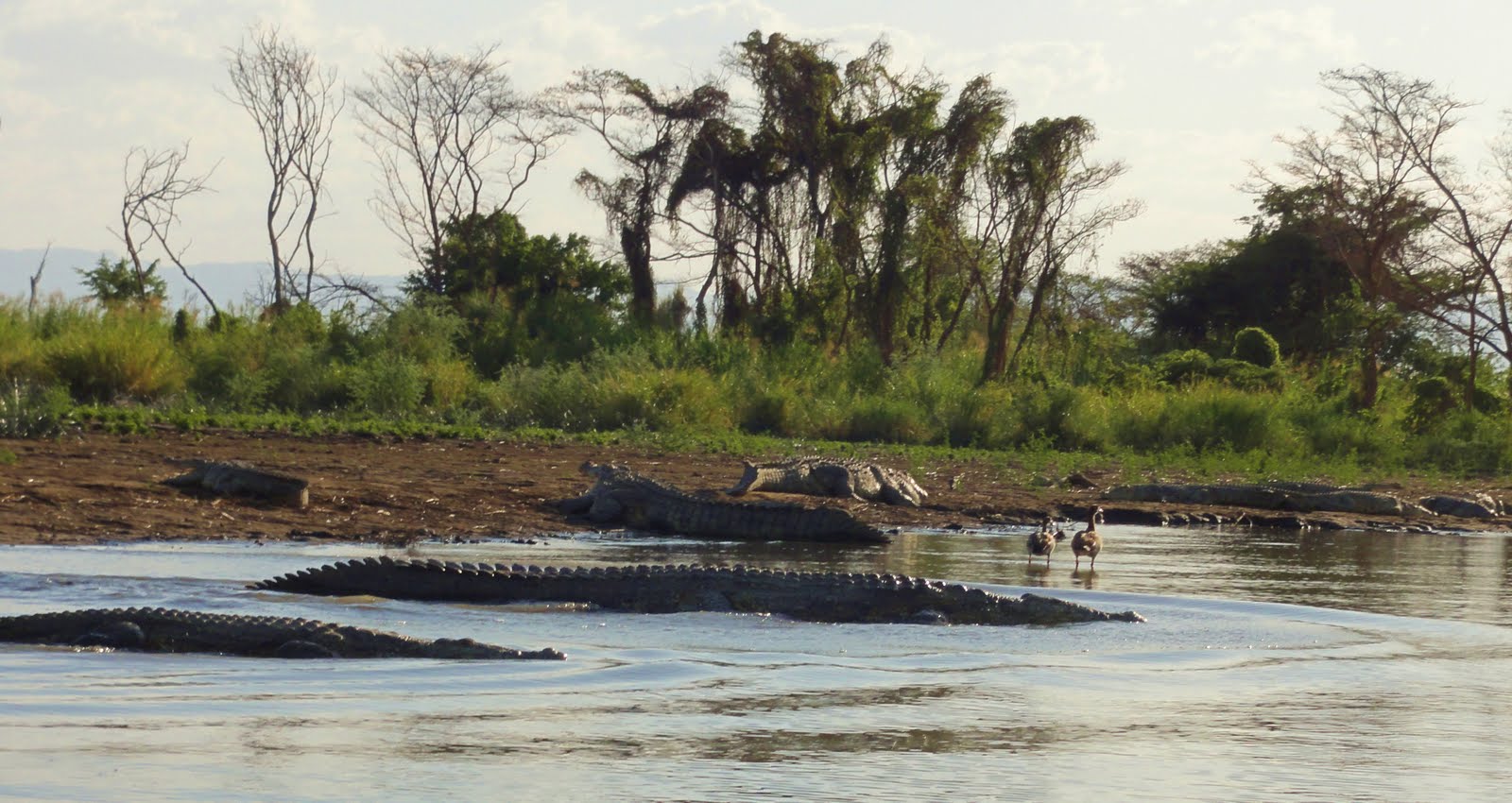
We left for Arba Minch this morning, 6 in one car, 7 in the other. I was the(not so) lucky one who got to sit in the middle of the front seat on the armrest/console. The boys were wonderful though and geryrigged a back strap for me as well as held a pillow against their knees the entire ride to Arba Minch so that I would have a backrest! The ride out was bumpy to say the least since at least 80% of the way was on dirt roads but it wasn’t overly uncomfortable. The other landcrusier jammed out to Taylor Swift and Beyonce (Single ladies) and a few others the ENTIRE ride there. It was entertaining to pass them on the road and hear the same song playing every time. We did not have a radio, so we made up our own songs including renditions of Ke$ha (“Wake up in the morning feeling like an archaeologist”) and “99 artifacts left to plot, 99 left to plot! Plot one here, plot one there, 98 artifacts left to plot”, among others. It was interesting to see how the scenery and temperature changed as we got farther into the rift valley. We followed a huge lake the majority of the three hour journey and it became more tropical (bananas and mangoes became prominent) as we approached. Arba Minch was definitely more touristy than we were used to and we saw many frenjies (foreigners like ourselves). After lunch we arranged for a boat ride out on Lake Chamo to the National Park so we could see wild animals!!! The ride to the boats was pretty sketchy, off-roading through dense undergrowth with no boat ramp in sight until suddenly we turned a corner and there were all the boats and we were right on the edge of the lake. We all got in one boat and our captain guided us out to the middle of the lake. The lake was HUGE and offered fabulous views of the surrounding mountains. We journeyed around to the National Park all on the look out for our first glimpse of animals. Our first animal spotted…was a hippo! Actually two. Beyond them was a flock of Egyptian geese interspersed with crocodiles at least 3 meters long that looked like they could easily swallow me whole. They were so ancient looking and fierce watching us. We got within several feet of the shore but remained in the boat. There were also many Hippos that would watch us warily with their eyes and ears just peering above the surface. Hippos are the most deadly animal in Africa and so we made sure not to get too close. We also warthogs (Pumba!!) and hornbills (Zazoo!!). We made our way back to shore very satisfied with our first African animal adventure (“Its like Animal Kingdom, but a thousand times better!!”) and attempted to find a place to eat.


Sunday, February 27, 2011

Best News Ever

Yay! Its official, we get to go to Arba Minch tomorrow! We have been planning a field trip to Arba Minch for quite some time but due to difficulties with the vehicles we kept postponing it but Dr. Brandt was able to find us a rental car/driver so we will be able to go. We are so excited!!!

Thursday, February 24, 2011

Updates from the field!!

February 17th
Second day excavating G9. We're mostly finding charcoal and a few occasional flakes. Its predominantly part of a hearth feature.
The past two nights thunderstorms took place within minutes of entering our tents. The winds made the tent walls suck in and out all at once. Roaring winds and mild thunder with flashes of lighting. The first night it frightened us. We were afraid that our tents would blow away.
From a cultural perspective, male friendship is different here. The day we arrived at the airport in Addis, we saw a man with his arm around another man on a bench and for a split second we thought they were gay (the same scene in America would have likely been a gay couple), but we remembered Dr. Brandt mentioning how in Ethiopian society men holding hands while walking or having their arms around each other is a common way of showing friendship. We’ve seen it repeatedly since then. The children are also usually hanging on their friends. They always come up and hold our hands when we are walking around camp.
An important part of archeology is the cultural aspect and how the people interact because this directly relates to the artifacts. We watched “Woman the Toolmaker” on the projector after dinner. The film is about the Konso and the few remaining hideworkers that still use stone tools for scraping goat and cow hides. It was interesting to watch it again now that I’m here and have a better understanding of the context. The movie mentioned that a source for their stones is picking up old artifacts from archaeological sites. Now that I’m here, it seems like an obvious option. There are artifacts everywhere; on all of the paths, right on the surface. There’s even a large flake of obsidian embedded in the dirt right in front of my tent. Hopefully we will have the chance to visit the Konso and meet the workers and see how they made and use their tools as an analogue for the past.

February 22nd
More catalog computer work, transferring the 2k+ entries into the database. Only a few more pages left. Yay!
After work Jessica, Tommy, Lindsey and I went for a hike. Yesterday we hiked the ridge to the right of camp. Today the left. Saw some amazing fields. Crowds grew as usual, especially as we took pictures. We ended up in front of a house, and then another, and then a third. They pulled out a bench and insisted we sit. We sat, watching the sunset behind a hut. They brought out a basket bowl filled with warmed kolo nuts. I felt bad eating the nuts while the kids all watched, but the adults insisted and I ate handfuls. I think I had a permanent grin on my face.
As we were leaving, the kids all ran up to grab some of the nuts from the bowl (they had been waiting the entire time). I tried to give my remaining nuts to a small kid. His mom (assumption) then scooped up his big handful into my hand (me: “no, no, no…!”). I felt bad taking the kids nuts, especially since I’d already had so many.
Everyone here treats us with utmost respect. We all feel very welcomed here, by virtually everyone. We greet everyone we see, and they greet us back. I often feel like people are excited to see us. People would never be this friendly in the Western world. There’s a lot less of a personal bubble here. Kids poke their heads into your tent, trying to see what you’re up to. Crowds form when you’re out. It’s hard to get used to.

Feb 23rd
Today we had a large tea time lecture while we were down in the cave about the geological and archaeological history of the cave. It was fascinating to hear what the hypotheses were on the formation of the site and it was especially interesting to mentally feel all the pieces fit together, that sense of “Ohh, that’s why that’s the way it is”. Dr. Fisher has been working with the German Geomorphologist who is here to analyze how the cave formed and they were able synthesize a plausible hypothesis on how the cave formed and how that influences the stratigraphy and the archaeology. They have some intriguing ideas on how water influenced the cave and how it drained throughout the site. They had excavated several geological trenches to get a better idea of the overall design of the various stratigraphic formations in order to form a better picture of where to best look for archaeological evidence and explanations of why we are finding the artifacts we are finding and why they are there.
Through this lecture we learned the importance of collaboration to provide answers and an overall picture of what was really taking place during and around the time that the archaeological deposits were made.
We’re excited to continue excavating tomorrow!

Wednesday, February 16, 2011

Events for the day: excavating made time go by very fast. Coffee break at ten thirty, back to excavating before lunch. Lunch was delicious; we had enjer'a with shiro (lentils). It’s a local dish of flat bread made with teff that looks like a pancake but tastes like sourdough.

It was Dr. Fisher’s birthday so we got cake with nutella frosting for dessert. Yummm!!
Tonight for dinner we had chicken!! Or more accurately, rooster. It was very spicy and tough but we were happy to have chicken!

Tuesday, February 15, 2011

Excitement in C9!

We found a hearth feature! Along with the hearth we have found several obsidian bifacial points and many other flakes and microliths. Unlike M15 where they find 300 artifacts a day, C9 is more laid back and less hectic. C9 does have some very interesting aspects, being that very little of it has been dated, and the fact that it is located in the back of the cave with signs of habitual occupation make it something to look forward to.